
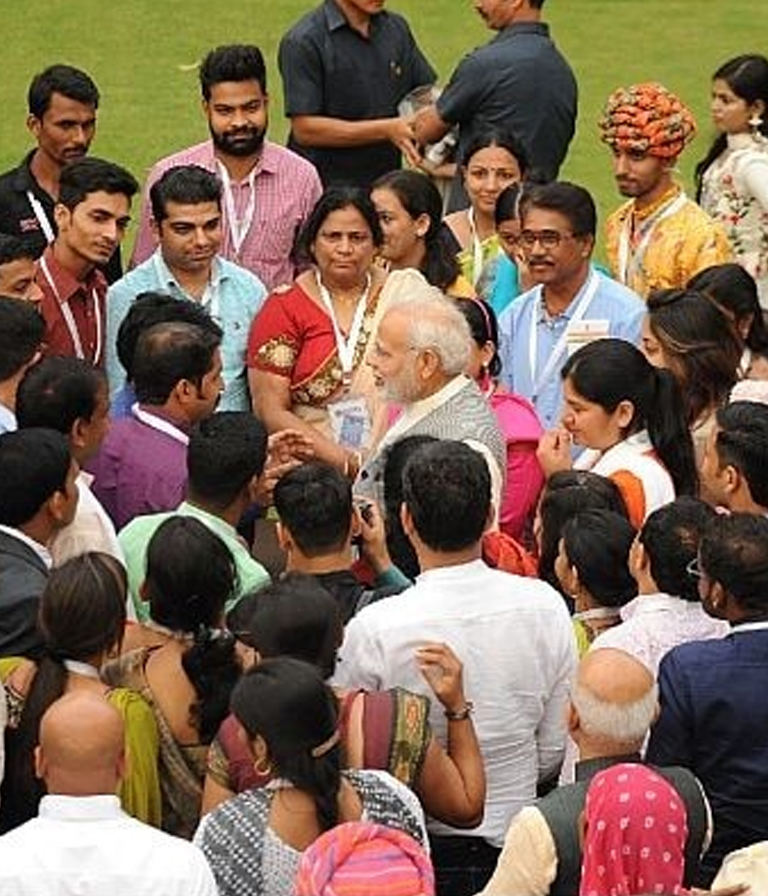
Creation of Massive Job Opportunities
India’s youth have the ability to transform the nation. With their active involvement, the path to development and prosperity for all is laid. In order to ensure their participation, it is pertinent that opportunities for employment are provided to them in tune with their skills and capabilities.
There has been massive creation of job opportunities with investment into and the pace of execution of infrastructure projects like making roads, laying down rail lines, setting up power generation including solar parks and transmission lines at an all-time high.
Similarly, there is significant growth in sales of commercial vehicles and passenger vehicles, creating jobs. Consider the sale of commercial vehicles. Net of exports, approximately 7.5 lakh vehicles were sold in FY18 in India. Considering a replacement rate of 25%, this still translates to 5.6 lakh new commercial vehicles added to the transport sector. Assuming a capacity of employment for each commercial vehicle at 2, we can infer that 11 lakh jobs are annual added in this sector alone. To this if one added the sales of cars, 3 wheelers and tractors around 30 lakh plus jobs are created in this sector alone yearly. The FDI inflows, which are at an all-time high, too is translating into manufacturing and job creation.
From just 2 mobile manufacturing units in 2014 we have grown to 120. With the massive expansion of the Indian smartphone market, expansion in app-based aggregators and other mobile app related companies, a host of job opportunities have been created.
Today, India has emerged as one of the top hubs of start-ups. App-based aggregators are flourishing in India across food, logistics, e-commerce, mobility solutions and many more such sectors.
The potential for the tourism sector to create jobs is immense. Foreign tourist arrivals in India grew by 50% in the last 4 years. Foreign exchange earnings from tourism also grew from US $18 billion to US $ 27 billion, a growth of 50% in four years. Domestic tourism has also grown. Today, India is seeing a historic boom in the aviation sector. Last year, over 10 crore people took a flight. Through UDAN scheme, we have put many places, particularly Tier-II and III cities on the aviation map. Will this not create jobs and opportunities across the board? According to an analysis by the Ministry of Tourism, the tourism sector alone has created 14.62 million job opportunities in the country during last four years. A private study in 2018 also analysed travel and tourism sectorand said it was growing at 16% per annum and adding 30-40 lakh jobs every year.
Self-employment is also a critical source of employment generation in India. More than 15 crore Mudra loans worth more than 7 lakh crore have been disbursed to small entrepreneurs and over 4 crore first time borrowers have started their business. An analysis by the MSME Ministry says that 10 crore jobs have been created in the MSME sector in the last 4 years.
Job creation among professional service providers such as chartered accountants, lawyers and doctors is also robust, as per data from their respective regulatory bodies. Income Tax (IT) data provides an indication on the number of new self-employed professionals. As per data available, an average of 150,000 tax paying professionals were added annually between assessment year (AY) 2014-15 and AY 2017-18. One can further assume that most of these professional tax payers hire support staff, likely to be below the threshold of twenty employees which then makes social security registration mandatory. Assuming each professional hires some support staff, this indicates a few lakh jobs being created annually.
A study has highlighted that increased government spending, rise of independent work and entrepreneurship have boosted incremental jobs for 20-26 million people during 2014-17.
NASSCOM Reportin January 2018 said 1.4 crore new jobs have been created between 2014-17 in four core sectors: Automotive, IT-BPM, Retail and Textiles; 65 lakh of these were in the retail sector alone.
We now have extensive data available on people contributing to social security benefits through the Employee Provident Fund Organisation (EPFO), the Employee State Insurance Corporation (ESIC) and the National Pension Fund (NPS). This is not survey data where a few thousand people are asked and the results then extrapolated. In this data, money is actually being deducted for the various social security schemes.
Between September 2017 and November 2018, a total of 73,50,786 net new subscribers were added to the EPFO, an average of 4.9 lakh subscribers each month. ESIC tells a similar story as well. On average, between September 2017 and November 2018, approximately 10 lakh-11 lakh subscribers were added each month. Even if we consider a 50% overlap with EPFO data, it yields about 10 lakh workers being added to the formal workforce per month, or 1.2 crores annually. A number of independent studies have shown salary hike of at least 10 per cent, indicating a buoyant economy.
Going by the record of various states on employment, one can see that the job opportunities are arising all across the board. As per the West Bengal government, they created 68 lakh jobs between 2012-16 and 9 lakh jobs in the last year. In Karnataka 53 lakh jobs were created in the last 5 years. The Tamil Nadu government is confident of its investor summit helping create over 10 lakh jobs for the people of the state.
Apart from the private and personal level investment, public sector spending in sectors like civil aviation, railways, roads, electricity and broadband connectivity have multiplier effect on overall economy especially job opportunities. Infrastructure creation has been happening at a breathtaking pace under the Modi government. This also creates more direct and indirect jobs.
Certainly, youth being the largest section of job seekers, would have benefitted from the job opportunities created in the rapidly growing economy showcasing youth-led development.
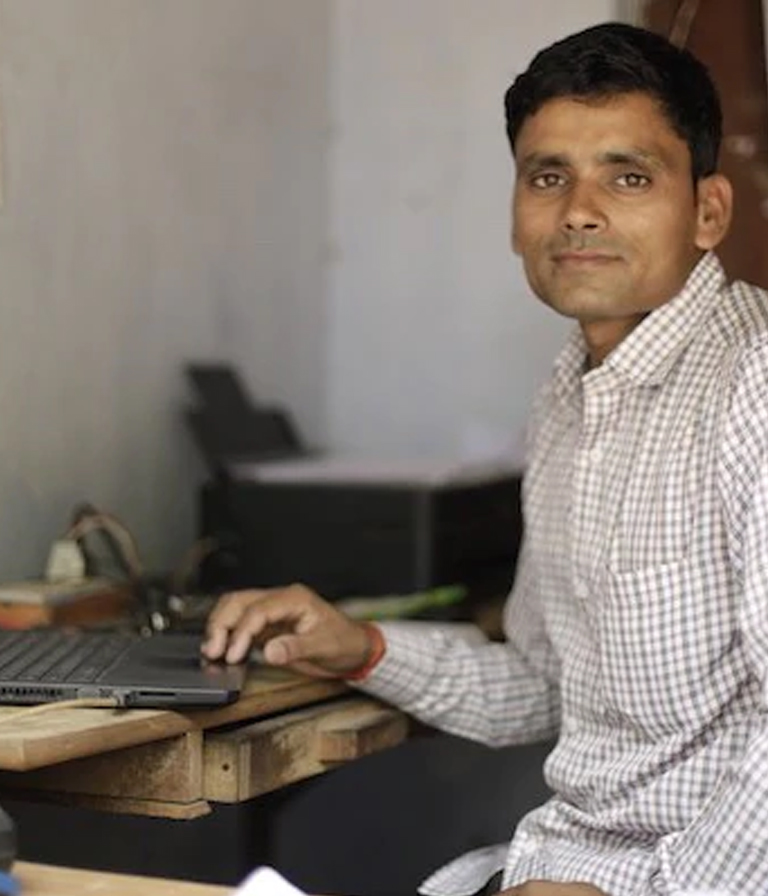
Social Empowerment through Education and Entrepreneurship
Empowerment through education
Budgetary allocations of both the Ministry of Social Justice & Empowerment and Ministry of Minority Affairs have increased significantly under the Modi government. However, a feature of the Modi government is that budgets do not merely remain on paper but also translate to outcomes.
Education is the first step that empowers any marginalised community to attain socio-economic mobility in society. Under the Modi government, education has become a potent tool for empowering the masses, especially the people belonging to socially and economically weaker sections of the society. One of the important steps taken by the government to ensure access to higher education, the amount of scholarships offered has been increased significantly. Also, the threshold of scholarship has been increased to extend this facility to more students from these communities.
For the Pre-Matric Scholarship for OBC, the income eligibility has been increased from Rs 44,500 per annum to Rs. 2.5 lakh per annum. For Pre-Matric Scholarship for SC, the income eligibility raised from Rs 2 lakh to Rs 2.5 lakhs. To boost educational infrastructure in tribal areas, 462 new Eklavya Model Residential Schools are being set up.
Scholarships and other educational facilities for these communities increased substantially. Over 5.7 crore students received scholarship support worth Rs 15,918 crore during 2014-2018.
Poverty, by itself, acts as an agent of exclusion from opportunities. To address this, in a historic decision ensuring equity and justice for all, the Constitution (103rd Amendment) Act 2019, was brought into effect by the Modi government without affecting the existing reservations to OBCs, SCs and STs. It gives 10% reservation in jobs and educational institutions for economically weaker section (EWS) in general category who have annual family income below Rs 8 lakh. To ensure effective implementation, 25% additional seats were provided in educational institutions to meet the 10% reservation.
Entrepreneurship for Social Empowerment
Entrepreneurship is not only a means to self-employment but also ensures social mobility. Making the people job creators, and not just job seekers is one of the mottos of the Modi government. The government’s flagship schemes such as Stand up India and MUDRA is providing support for entrepreneurial spirit to flourish among the weaker sections of the society. In the first three years of the MUDRA Yojana, over 50% of the entrepreneurs funded, about 6.71 crore people, belonged to the SC/ST/OBC sections of society.
The National SC/ST Hub was established in October 2016, with an initial allotment of Rs 490 crore for the period 2016-20 to promote SC/ST entrepreneurs by strengthening market access and linkage, monitoring, capacity-building, leveraging financial support schemes and sharing industry best practices.
A far-reaching initiative that will help tap the innovative and entrepreneurial zeal among people of the SC community is the Venture Capital Fund for Scheduled Castes. Launched by the Modi government, this scheme has already assisted 90 companies with a sanctioned amount of Rs 322.80 crore.
The Modi government is helping expand marketing opportunities to tribal communities. Better market linkages are being created as well rules that hindered their economic progress are being done away with. Further, 14 new items were added to Minor Forest Produces (MFP) and freedom has been given to the states for fixing the MSP at 10% above or below the MSP rate decided by the Union Ministry.
Crores of people are involved in bamboo-related activities, many of them from the tribal population. The Modi government amended the colonial era Indian Forest Act, 1927, exempting bamboo grown in non-forest land from the Forest Act. It was followed with the announcement of “National Bamboo Mission” in Budget 2018-19 with the allocation of Rs 1,290 crore.
The new model of empowerment, as being implemented by Modi government, shifts the paradigm from outlays to outcomes. It equips the weaker sections of the society with the tools of empowerment that allow them to break away from the cycle of poverty and exclusion.
Institutionalising Honesty
JAM as the Tool to Empower Masses
Without doubt, the Jan Dhan Yojana-Aadhar-Mobile or the JAM trinity has facilitated government’s objective of increasing transparency with Direct Benefit Transfer (DBT). The biggest step towards financial inclusion, the Jan Dhan Yojana has helped create a potent system of distribution that curbs leakages in the process. The Jan Dhan – Aadhar – Mobile (JAM) trinity has been instrumental in minimizing the role of middlemen. With unique identification associated with every account, in the form of account number, there is no scope for duplication of accounts or ghost beneficiaries. As of Februrary 2019, 439 schemes across 55 ministries fall under the purview of DBT.
Imagine if there was no JAM, the historic PM-Kisan Samman Nidhi Yojana with the aim of providing Rs. 6,000 of yearly income to 12 crore marginal farmers would have been lost in the maze of graft-ridden delivery systems.
License-Inspector Raj a ‘real’ thing of the past
Although the 1991 reforms had sought to end the license-inspector raj, in reality things hadn’t changed so effectively on the ground. But now in addition to the path-breaking GST regime, leveraging technology to the fullest, the government has simply ‘shut down the shutters’ of the license inspector raj. No more can any government official harass a law-abiding businessman or a tax-paying citizen. For instance, the advent of GST has while brought down the effective tax rates on goods and services benefiting the end-consumers to a great extent, through GSTN’s uniform interface for the tax payer and a common and shared IT infrastructure between the Centre and States, the possible role of any real person compromising the system has been completely ruled out. The creation of Government e Marketplace (GeM) as a digital e-commerce portal to facilitate online procurement of common use Goods & Services required by various Government Departments/Organisations/PSUs is another landmark step with the aim of enhancing transparency, efficiency and speed in public procurement.
Discretion-free allocation process
Discretion-free appointment process
The abolishing of interviews for all group C and D, and non-gazetted group B posts by the government has been another huge measure aimed at dealing with corruption.
It must be remembered that the last five years have not only seen a frontal assault on corruption of all kinds, there has even been an attempt to create a constructive discourse around the virtue of honesty itself. With technology, financial inclusion and a strong political will, the Modi government at the highest level has done everything possible to institutionalise and reward honesty.

Ease Of Living Ensured Across Various Domains
The government took up certain governance reforms with innovative approaches to chronic problems while eliminating corruption and ensuring ease of living, such as :
Interviews were abolished for all group C and D, non-gazetted group B posts leading to a shutdown of the entire system of ‘recommendations’, thereby reducing the menace of corruption in jobs.
Self-attestation of documents was allowed reducing the hardship faced by citizens. Red beacons on VIP cars were removed ending the long-established VIP culture.
There was a simplification of the Driving License Application Procedure and the procedure for obtaining passports was streamlined by removing unnecessary delays.
Before 2014, there were 77 Passport SewaKendras. This number has now increased to more than 400. People are no longer required to repeatedly visit other cities for getting their passports.
The PAHAL scheme for direct benefit transfers for LPG was effectively implemented. This meant the LPG subsidy arrived in bank accounts of beneficiaries directly, with no middlemen involved.
Authenticity of online documents was ensured through the Digital Locker System for sharing e-documents through registered repositories.
The National Scholarships Portal was set up as a one stop solution for an end to end scholarship process. Not only this, scholarship grants were transferred to students via direct benefit transfer.
100 accessible websites of various State Governments/UTs under Accessible India Campaign were launched easing their access to Divyangs.
Long hectic queues at toll plazas are now becoming things of the past. The introduction of Electronic Toll Collection (ETC) ensures seamless movement of traffic and collection of fee as per notified rates.With a total number of 440 Toll Plazas, more than 34.3 lakh FASTags units have been issued. There will be further easing of transportation of goods with plans to link e-way bills with FASTags.
EASE OF LIVING FOR THE POOREST SECTIONS OF SOCIETY
As per an estimate, healthcare costs land more than 5 crore India into poverty, with 3.8 crore fell below the poverty line due to spending on medicines alone. In this context, many steps taken show how Modi government has brought ease of living for the people:
The launch of Ayushman Bharat is reducing expenditure of poor people, as healthcare is now affordable for all. More than 15 lakh beneficiaries have beenadmitted to hospitals and treated for free. Some treatments availed include Cardio-thoracic & vascular surgery, urology and neurosurgery.
Nearly 5,000 PM BharatiyaJanaushadhiKendras are providing affordable medicines and are functional across the country. These provide medicines at vastly lesser than the market price of medicines.
In the past five years the price of stents and knee implants have reduced greatly owing to proactive measures by the NDA government to cap their prices.
EASE OF LIVING FOR THOSE ARRIVING IN INDIA
An Online Event Clearance System has been introduced to grant security clearances to conferences, seminars or workshops organized in India. This has eased the issue of Conference Visas for foreign nationals and delegates intending to attend such events.
The ‘e-Visa’ facility covers approximately all the countries of the world.Theforeigner arriving does not have to interact with any Indian official till his arrival at the immigration counter, making it easier to reach India. With the implementation of this facility the number of foreigners who visited India on e-visa have gone up from 5.17 lakh in 2015 to 21 lakh in 2018.
All these reforms illustrate the government’s effort towards making a New India as per 21st century expectations, aspirations and hopes to bring about a qualitative improvement in lives of people.
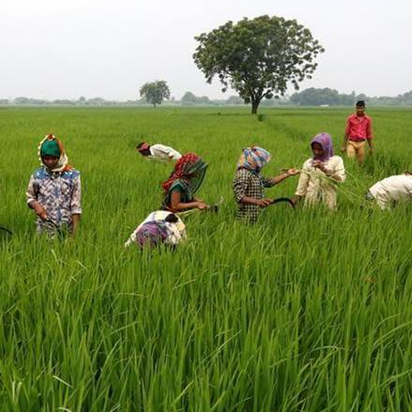
PM-KISAN: Modi govt has so far transferred Rs 5,215 cr to 26 mn farmers
The central government has so far transferred Rs 5,215 crore to over 26 million small and marginal farmers under the PM-Kisan scheme announced in the last month’s interim budget.
Ahead of the general election, the Centre announced the Rs 75,000-crore Pradhan Mantri Kisan Samman Nidhi (PM-Kisan) scheme under which Rs 6,000 per year would be disbursed in three instalments to around 12 crore farmers who hold cultivable land up to 2 hectares.
In the budget, the NDA government allocated a sum of Rs 20,000 crore, to transfer Rs 2,000 each to farmers in the first installment by March-end, for the ongoing fiscal under the scheme.
The scheme was formally launched at national level by Prime Minister Narendra Modi on February 24 at Gorakhpur in Uttar Pradesh by transferring the first instalment to 1.01 crore farmers, totalling Rs 2,021 crore.
“Under PM Kisan Samman Nidhi: Benefit of over Rs 5,215 crore transferred directly into the bank accounts of more than 26 million small and marginal farmers within 37 days of announcement of the scheme!,” the Prime Minister’s Office (PMO) said in a tweet on Sunday.
“Would be first scheme where such an amount has been transferred to so many beneficiaries in such a short span of time,” the PMO further said.
Last week, the Union Agriculture Ministry had said that Uttar Pradesh, Andhra Pradesh and Gujarat have taken a lead in taking benefit under the PM-Kisan scheme.
Till March 7, as many as 74.71 lakh farmers in Uttar Pradesh received the first installment, while 32.15 lakh farmers were benefitted in Andhra Pradesh.
Around 25.58 lakh farmers in Gujarat, 11.55 lakh farmers in Maharasthra, 14.41 lakh farmers in Telangana and 14.01 lakh farmers in Tamil Nadu got the first payment.
Among other states, 8.34 lakh farmers in Haryana had received the first installment, followed by 8.09 lakh farmers in Assam and 8.07 lakh farmers in Odisha, the ministry data had showed.
The Centre is transferring the money directly into the bank accounts of eligible farmers, being identified by states and union territories (UTs).
The Leadership Issue
The schedule for the Lok Sabha elections has been announced. The next ten weeks will witness a clash of ideas and ideologies, competitiveness amongst candidates and a battle for leadership. There are several issues which occupy the agenda space in an election. Today, I deal with one of the principal issues which occupies a foremost relevance in 2019 General Elections – the issue of leadership.
The Incumbent Prime Minister
India has witnessed several General Elections where incumbent Prime Minister has faced an anti-incumbency. Anti-incumbency is a phenomenon where unhappy people vote an incumbent out. The Opposition succeeds by default. However, if the comfort level and the confidence with incumbent is high, his performance, leadership, ethics and integrity has been tested, the incumbent succeeds.
The country assessed Shri Narendra Modi as the Chief Minister of Gujarat for a period of fourteen years. He emerged a strong leader with development orientations, a nationalist vision, a politician of utmost integrity. He ensured that those who work with or under him also adopt the ethics which is expected from people in public offices. He withstood a false and vicious campaign against him. The facts in the campaign proved false in every legal battle. He did not allow himself to be bogged down by the hostile campaign. He laid down his own developmental agenda for the State and won three successive Lok Sabha elections and three Assembly Elections. He communicated directly with the people. He stands out as a communicator. He created and nurtured a new leadership in Gujarat. The Gujarati population all over the world identifies with him. He inspired them.
He entered the 2014 electoral race when the country saw indecisiveness, a collapse of leadership, a policy paralysis and integrity a big casualty. The people rewarded him with a comfortable mandate.
How does a nation assess him after five years?
He has proved to the world that India can be administered with integrity and honesty. India is capable of tough decisions in order to ensure growth to enable India to secure itself. India occupies the high table in the world. It has become the fastest growing economy. He ensured an economic model where the advantage of the additionality of resources emerging from the fast growing economy is spent on infrastructure or transferred to the poor, particularly in the rural areas. He did not give slogans but he transferred actual resources to bring down poverty levels and added to the ease of living.
Even his critics are bewildered by his evolution of his national security doctrine. He has evolved India from a nation which only defended itself domestically against terror through intelligence and security network and isolated Pakistan at the global level to a nation which is capable of destroying terror at the points of its’ origin. The success of the surgical strikes of 2016 and the air strikes of 2019 points to this direction.
Within the NDA there are no leadership issues. There is absolute clarity. Shri Narendra Modi leads the NDA and will be the Prime Minister in the event of the NDA victory. His leadership is nationally accepted, his ratings are very high. His track record speaks for itself.
Let us look at the other side
What was promised to be ‘Mahagathbandhan’ is turning out to be a ‘gathbandhan’ of several conflicting gathbandhans. It is a self-destructive ‘coalition of rivals’. The BSP and the SP will contest against the Congress but eventually join hands. So will the Trinamool and the Congress -Left alliance in West Bengal. However, in Kerala the Congress and the Left will contest against each other. The PDP and the National Conference tried to form the Government together with the support of the Congress in Jammu and Kashmir. Today they are rivals in an election and on the dangerous agenda of either ‘autonomy’ or ‘pre-1953 status’ but could join hands with the gathbandhan. The Biju Janata Dal, the TRS and the YSRCP are not with the gathbandhan.
The leadership issue is an absolute puzzle. The Congress President Shri Rahul Gandhi is a inadequate leader. He is tried, tested and failed. His lack of understanding of issues is frightening. He aspires to be the leader of this chaotic pack.
Mamata Didi is positioning herself as the ‘sutradhar’ of this alliance. She won’t concede a single seat either to the Congress or the Left in West Bengal but will want them to be her pillion riders if she drives the vehicle. Her instinctive comments on policy issues are retrograde.
Behan Mayawati, the leader of the BSP, was wiped out in the last Lok Sabha elections. She changed her strategy. She wants a strong BSP and a weak Congress. She holds her cards close to her chest. She will open them only after the results are declared. She has had a strategic ‘alliance of compulsion’ with the Samajwadi Party in Uttar Pradesh but the scars of her historical conflict with its allies have not washed away. She wants a strong BSP and a weak Congress. Leaders with flexible ideologies think that they are acceptable to all. The Opposition alliance is unclear – it is absolutely fragile. None of the political parties is capable of any significant number of seats. The alliance will not have a stable nucleus. It has a set of highly ambitious, self-centered and maverick leaders. Barring the Congress and the Left, most of them have done political business with the BJP in the past. Their ideologies and commitment to their constituents are widely different.
The Contest
The contest is between a leader in whose hand the country is developing and secure. He is trusted. Against him it is no one projected leader. There are multiple leaders, each trying to outwit the other. They can only promise a temporary Government if we go by the past precedents. One can be certain of chaos. The choice is clear – it is either Modi or chaos.
Modi Government’s Decisive, Multi-pronged Action Against Corruption
One of the biggest evils plaguing our nation was the curse of corruption. Winning on the plank of eradicating corruption from the very roots, Modi government has provided an incorruptible administration at the helm. It has taken stringent steps to arrest generation of black money as well ensure that economic offenders are brought to book.
As its first cabinet decision, it set up a court monitored SIT which made several recommendations through its interim reports to check generation of black money, many of which were accepted by the government. The SIT had detected black money of more than Rs. 70,000 crores, including Rs. 16,000 thousand crores in offshore accounts.
In order to provide legal teeth to the fight against corruption, the Black Money (Undisclosed Foreign Income and Assets) and Imposition of Tax Act, 2015 was enacted by Modi government. The Act allows a penalty up to 90% of the value of an undisclosed asset in addition to tax at 30%, as well as rigorous imprisonment in certain cases. These stringent penalties and imprisonment, act as an effective deterrence against entities involved in stashing Black money.
Modi government has strengthened the Double Tax Avoidance Agreement (DTAA) with various countries, such as Mauritius, Singapore, Cyprus, etc. The government renegotiated tax treaties to curb treaty abuse, tax evasion and round-tripping of funds—the practice of money stashed overseas by Indians returning home through tax haven countries. These amended tax treaties are considered as a big victory in India’s fight against black money.
Under the leadership of PM Modi, the government has taken various proactive measures against black money stashed abroad which have led to positive results. There has been significant decrease in the loans and deposits in the Swiss banks as well as in Swiss non-bank loans and deposits. The steps taken by Modi government to check the flight of black money in off-shore accounts include, India and Switzerland signing a Joint Declaration on the introduction of the Automatic Exchange of Information (AEOI) on tax matters. This will ensure that India will receive information on accounts held by Indian residents in Switzerland from September 2019 for 2018 and subsequent years on an automatic basis.
The Modi government successfully enacted the long pending Benami Transactions (Prohibition) Amendment Act, 2016 to enable confiscation of Benami property and prosecution of Benamidar and the beneficial owner, which may result in rigorous imprisonment up to seven years and fine up to 2 percent of the fair market value of the property. The 24 dedicated Benami Prohibition Units (BPUs) have been set up all over India to ensure swift action in respect of Benami properties. This resulted in around 1,600 transactions being a part of provisional attachment while the value of properties under attachment is worth Rs. 6,900 crores.
The Fugitive Economic Offenders Act, 2018, a brainchild of Modi government, equip the investigative agencies going after absconding economic offenders. It allows the law enforcement agencies to confiscate assets of those who cheat the nation and flee the jurisdiction of Indian courts. This will force the accused to return to India and face trial for his offenses and in turn, help the banks and financial institutions to achieve higher recovery from financial defaults committed by fugitive economic offenders. Additionally, Fugitive Economic Offenders (Procedure for Conducting Search and Seizure), Rules, 2018 ensures faster attachment and confiscation of assets.
The spirited fight against black money is ensuring that the decades of corruption is put to a halt and justice is served. It is for the time that the government has been proactive in curbing generation of black money. The anti-black money measures taken during the tenure of Modi government have brought undisclosed income of about Rs. 1,30,000 crore to tax. Enforcing corporate accountability and accountability towards loans taken from public money is also an important way to clean the economy.
The UPA dispensation had left behind banks in a woeful state. From independence till 2008, that is, in 60 years banks gave loans of Rs. 18 lakh crore. However, from 2008 to 2014, in just 6 years, the Congress government took this figure to Rs. 52 lakh crore! These created massive NPAs which too were hidden by the UPA government.
The Modi government not only unearthed these NPAs but also set about resolving them by passing the Insolvency and Bankruptcy Code. So far, the government has helped banks and creditors recover more than Rs. 3 lakh crore.
Be it in clean governance or going after black money, be it launching a multi-pronged war against corruption or resolving NPAs, the Modi government has made every effort to usher in a clean economy for New India.

Modi govt disburses over Rs 8,300 crore subsidy to 3.77 lakh home buyers under PMAY
Subsidy of over Rs 8,300 crore has been disbursed to more than 3.7 lakh home buyers so far under the government’s Credit Linked Subsidy Scheme (CLSS), the Lok Sabha was told Tuesday. In a written response to a question, Union Housing and Urban Affairs Minister Hardeep Singh Puri said since the CLSS was launched under the Pradhan Mantri Awas Yojana (Urban), Rs 8,378.15 crore has been disbursed to 3,77,022 home buyers. The PMAY(U), launched by Prime Minister Narendra Modi in June 2015, aims to ensure “housing for all by 2022” by providing financial assistance to beneficiaries.
CLSS was introduced in June 2015 under the PMAY to grant home loans to customers from the Economically Weaker Section (EWS) and the Lower Income Group (LIG) and was extended to the Middle Income Group (MIG) from January 2017. According to an official data, Gujarat has topped the list of being disbursed Rs 2,683.63 crore under the CLSS, followed by Maharashtra (Rs 2,356.44 crore), Uttar Pradesh (Rs 494.20 crore), Madhya Pradesh (Rs 461.20 crore).
In the 2015-16 financial year, the government had disbursed Rs 99.36 crore to 5,835 home buyers under the CLSS, while in 2016-17, Rs 424.33 crore had been given to 22,607 home buyers. In the 2017-18 financial year, Rs 2,481.56 crore was disbursed to 1,12,449 beneficiaries. In the current financial year, the government has so far disbursed 5,372.90 crores to 2,36,129 home buyers under the CLSS across the country.
Institutional respect and Institutional contempt - two contrasting approaches
In the summer of 2014, the people voted decisively for:
Honesty over dynasty.
Development over decay.
Security over stagnation.
Opportunities over obstacles.
Vikas over vote-bank politics.
Indians were tired of our beloved nation being in the Fragile Five, where corruption, cronyism and nepotism made headlines instead of anything positive.
India voted to shed the baggage of the past in pursuit of a better future.
The mandate of 2014 was epoch-making also because it was for the first time in the history of India that a non-dynastic party was blessed with a complete majority.
When a Government works with the spirit of ‘India First’ instead of ‘Family First’, it shows in its working.
Over the last five years, the Indian economy has been the cynosure of the world’s eyes.
India has made remarkable achievements in sanitation coverage (from 38% in 2014 to 98% now), banking the unbanked, financing the un-financed, building futuristic infrastructure, homes for the homeless, providing healthcare for the poor and educating the youth.
Reflective of this paradigm shift is the fact that now, there is a Government that puts institutions above everything else.
India has seen that whenever dynastic politics has been powerful, institutions have taken a severe beating.
Parliament
The overall productivity of the 16th Lok Sabha was a phenomenal 85%, which is significantly higher than the productivity of the 15th Lok Sabha.
Between 2014 and 2019, the Rajya Sabha’s productivity was 68%.
The Interim Budget session witnessed productivity of 89% in the Lok Sabha and a mere 8% in the Rajya Sabha.
The nation knows the numerical dynamics of both houses. It is clear that when a non-dynasty party in higher number its tendency to work more is visible.
India should ask- why was the Rajya Sabha not working as productively as the Lok Sabha? Which were the forces disrupting the House and why?
Press and Expression:
Dynastic parties have never been comfortable with a free and vibrant press. No wonder, the very first Constitutional Amendment brought in by the Congress government sought to curtail free speech. Speaking truth to power, which is the hallmark of a free press was seen as vulgar and indecent.
The recent UPA years saw the bringing of a law that could land you in prison for posting anything “offensive.”
A tweet against the son of a powerful UPA minister could land innocent citizens in jail.
Just a few days ago, the nation watched with horror when a few youngsters were arrested for expressing their true feelings at a programme in Karnataka, where the Congress is sharing power.
But I want to tell the Congress that no amount of intimidation will change the ground realities. Curbing freedom of expression will not change people’s poor impression of the party.
Constitution and Courts:
When the sun set on the evening of 25th June 1975, it took with it the democratic ethos of India.
A hurried radio address by the then Prime Minister showed the extent to which the Congress can go to safeguard the interests of one dynasty.
The Emergency made the nation a prison overnight. Even to express was to commit sin.
The 42nd Amendment put curbs on the courts, covering the Parliament and more.
It took a groundswell of public opinion to end the Emergency but the anti-constitutional mindset of those who imposed it remained. The Congress has imposed Article 356 almost a hundred times, with Mrs. Indira Gandhi herself doing so about fifty times. If they did not like a state government or leader the government was dismissed.
Congress’ contempt for the courts is anyway legendary. It was Mrs. Indira Gandhi who called for a “committed judiciary”, which seeks to make the courts more loyal to a family than to the Constitution.
This pursuit of a “committed judiciary” made Congress overlook several respected Judges while appointing the Chief Justice of India.
Congress’ modus operandi is simple- reject, discredit and threaten. If a judicial verdict goes against them, they reject it, then they discredit the judge and thereafter, talk about bringing impeachment motions against the judge.
Government bodies:
In a telling comment, former Prime Minister Rajiv Gandhi called the Planning Commission led by Dr. Manmohan Singh, ‘A bunch of jokers.’
This comment gives you a glimpse of how Congress treats government institutions.
Remember the UPA years, when the Congress questioned the CAG just because that institution exposed their corrupt shenanigans like 2G, Coal Scam etc.
CBI became the Congress Bureau of Investigation- it was used time and again on political parties just before crucial parliamentary votes.
Tensions were deliberately created in organisations such as IB and RAW.
A policy decision taken by no less than the Union Cabinet was torn into pieces by someone who was not a member of any ministry and that too, in a press conference.
The NAC was created as a body parallel to the Prime Minister’s Office. And then, Congress talks about institutions?
In the 1990s, a fictitious spy scandal was created in India’s premier space agency ISRO just to suit Kerala Congress’ factional politics. It did not matter to them that a brilliant scientist had to suffer due to that.